
How Sound Healing Eases Anxiety
What Actually Happens in Your Nervous System
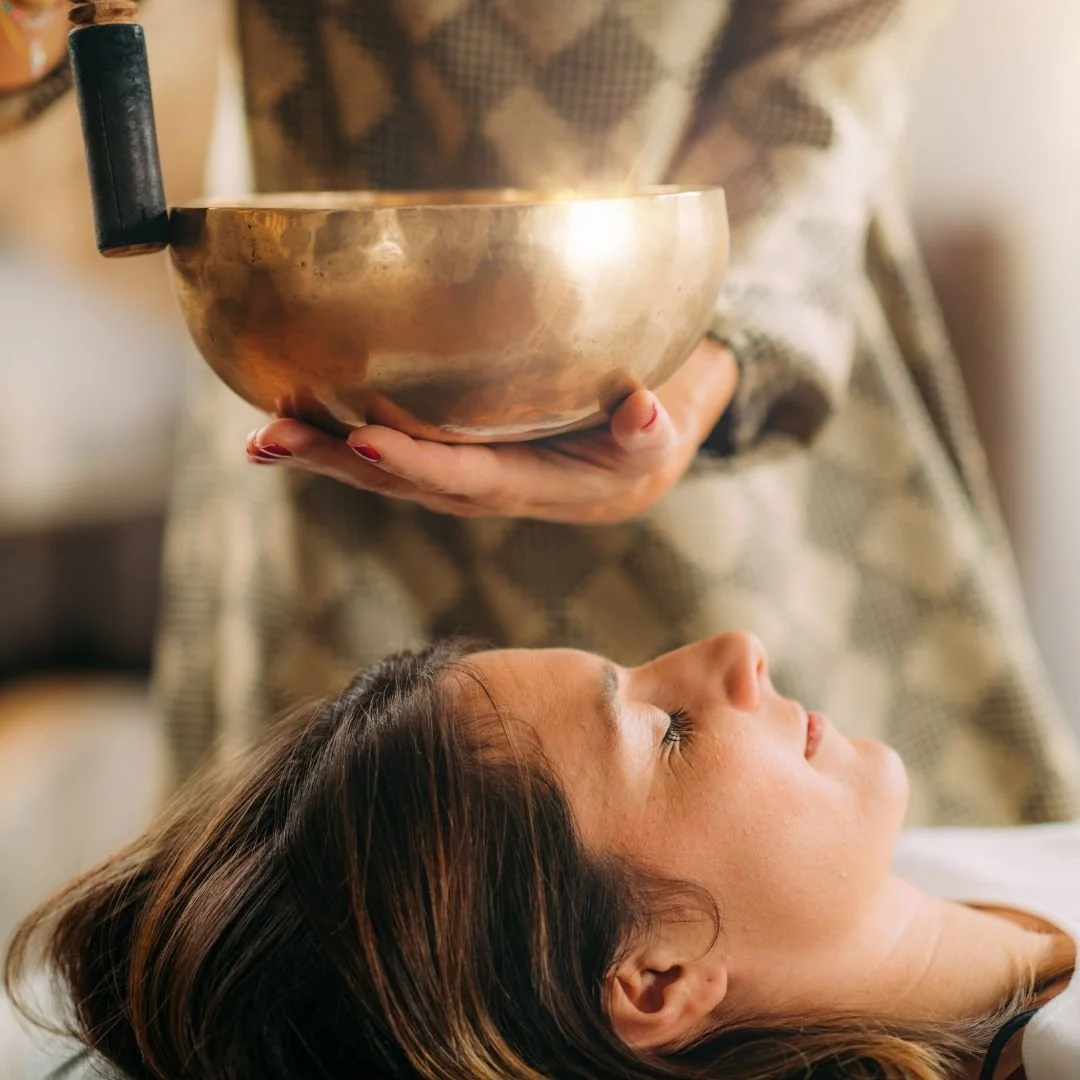
Anxiety doesn't live only in your thoughts. It lives in your body: in a racing heart, a tight chest, shallow breath, a mind that won't slow down no matter how hard you try to talk it down. That's why so many people find that thinking their way out of anxiety only gets them so far. You have to reach the nervous system directly. Sound does exactly that.
As a registered nurse who's spent years studying how the body regulates stress, I didn't come to sound healing as an alternative to that training. I came to it as an extension of it. Sound doesn't replace what you already know about calming down. It gives your nervous system a faster, more direct route there.
Your Body Hears Sound Before Your Brain Understands It
Sound reaches you as vibration before it ever registers as music or noise. Your skin, your bones, and the fluid in your inner ear all pick up vibration, and your nervous system responds to it almost instantly, well before your thinking brain has time to interpret or judge what it's hearing.
This matters enormously for anxiety, because anxiety often runs on a loop of overthinking. Sound gives your body a way to shift state without needing your mind to "figure it out" first. You don't have to solve anything or understand anything for your body to start settling.
The Vagus Nerve Does a Lot of the Work
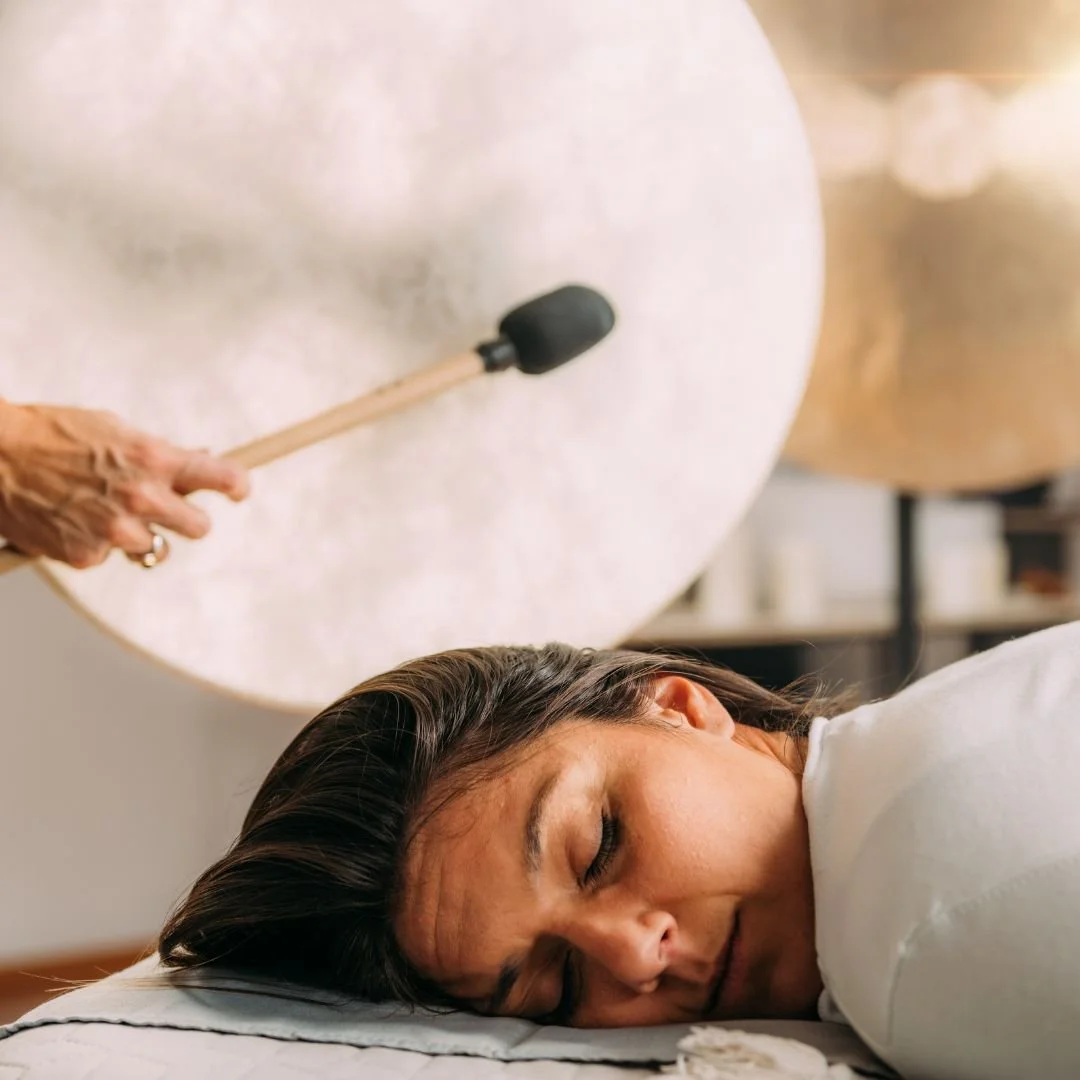
Your vagus nerve runs from your brainstem down through your neck, chest, and abdomen, and it plays a central role in switching your body from a stressed, activated state into a calm, restorative one. Slow, low-frequency vibration, the kind a large gong or a crystal bowl produces, stimulates this nerve directly.
When the vagus nerve activates, your heart rate slows, your breathing deepens, and your body shifts out of fight-or-flight and into what's sometimes called "rest and digest." This isn't a metaphor. It's a measurable physiological shift, and it's one of the reasons a sound session can leave you feeling calm in a way that feels different from simply distracting yourself.
Sound Also Changes Your Brainwaves
Anxiety tends to keep your brain in a fast, alert wave pattern called beta. Slow, sustained tones, especially the kind produced by crystal bowls held at a steady pitch, encourage your brain to shift toward alpha and theta waves, the same patterns associated with deep relaxation and the drowsy state right before sleep.
You don't have to meditate or "clear your mind" for this shift to happen. Your brain responds to the sound itself. This is part of why people who've never meditated a day in their life still walk out of a sound session feeling like something genuinely shifted, even if they spent the whole time just lying there listening.
What This Looks Like in a Session
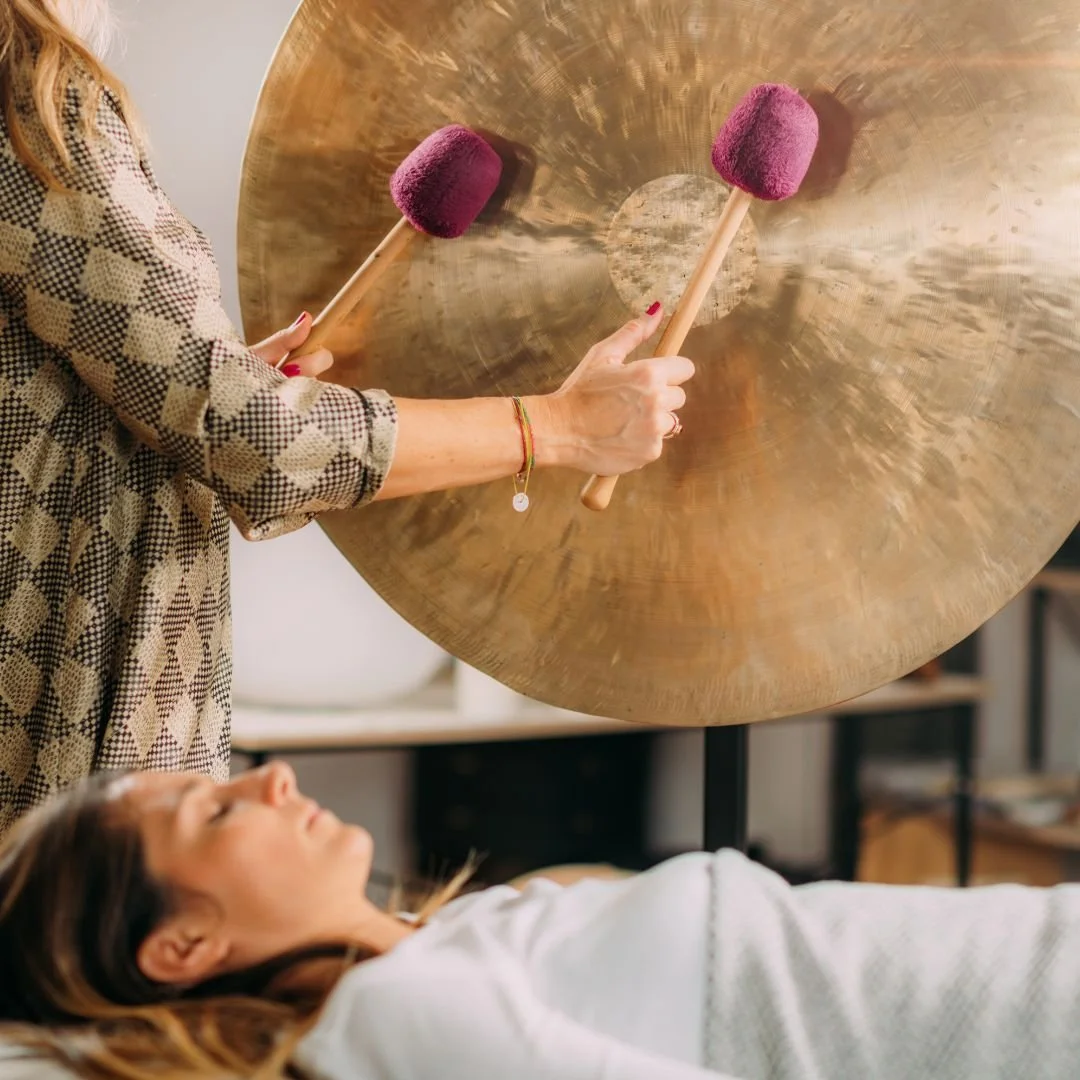
In my studio, this isn't abstract theory, it's the reason I choose the instruments I choose. I have crystal bowls that span nearly three full octaves, and I select specific notes based on what a person needs that day: grounding, low tones for someone whose anxiety shows up as a racing, wired feeling, or brighter, more open tones for someone who feels stuck or shut down.
You lie down, you don't have to do anything, and the sound helps your body do what it already knows how to do. Most people notice their breathing slow within the first few minutes. Many people cry, laugh, twitch, or simply fall into a heavier, deeper kind of rest than they expected. All of that is your nervous system releasing tension it's been holding, sometimes for a long time.
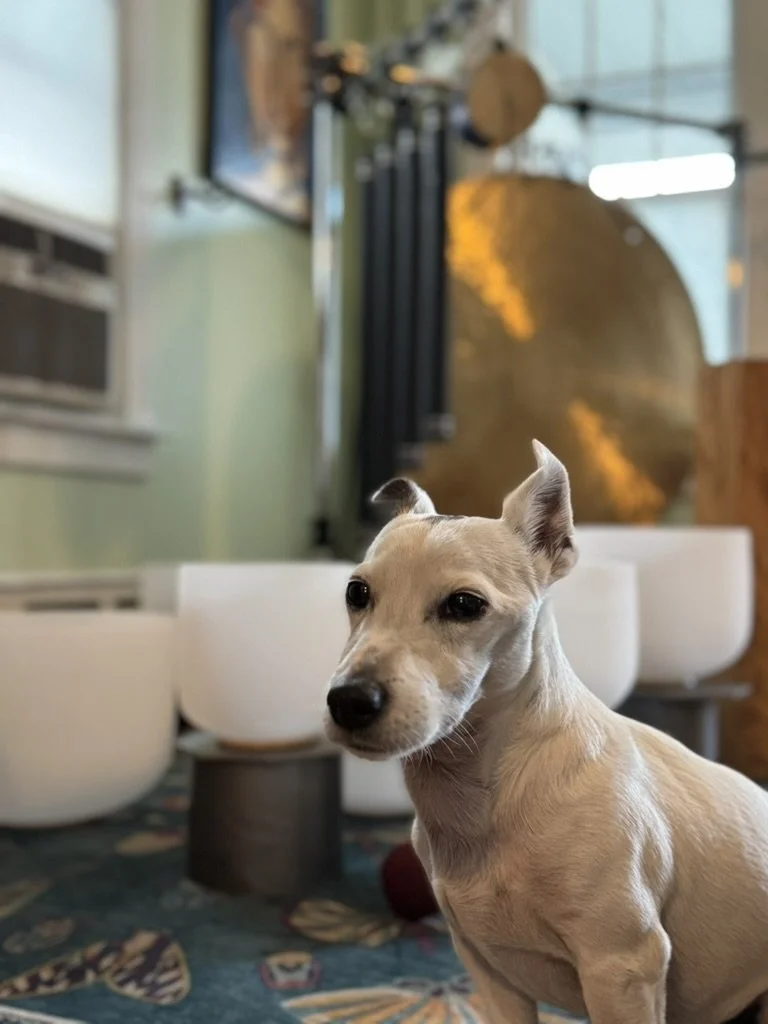
Simba, one of my two studio dogs, tends to settle in amongst the instruments when a session starts. He's usually the first one in the room to relax.
Sound Healing Isn't a Replacement for Treatment. It's a Tool That Works Alongside It
I want to be honest about this, because I think honesty is what makes this work trustworthy. Sound healing isn't a cure for an anxiety disorder, and it isn't a substitute for therapy, medication, or medical care when those are what you need. What it offers is a direct, physical way to help your nervous system come down out of a stress response, something many people find meaningfully supports whatever else they're doing to manage their anxiety.
If anxiety has been running your days, sound healing gives your body a place to practice something different: stillness that doesn't require effort, and calm that arrives through your senses instead of through willpower.
Ready to Feel What This Is Like?
You don't have to understand the science to feel the shift. You just have to lie down and let the sound do what it does. A few ways to start:
Book a private session and get a session built around exactly what your nervous system needs that day.
Join a small group sound bath in my home studio (capped at 8 people) for a shared, communal reset.
Explore InSound, my digital membership, for recorded sessions you can return to anytime anxiety creeps up between visits.
Not sure whether a private or group session makes more sense for you? I break down the differences in detail in Private or Group? How to Know Which Sound Session Is Right for You.
