
What to Expect From Your First Private Sound Healing Session
If you've never tried sound healing — or meditation of any kind — before, it's completely normal to feel a little unsure about what you're walking into. Do you have to sit cross-legged for an hour? Will you feel silly? What if you can't "turn your brain off"?
The short answer: you don't have to do anything except lie down and let the sound do the work. Here's a closer look at what a first session with me actually looks like, from the moment you arrive to how you might feel afterward.
Before the Session
You don't need any experience, flexibility, or belief in anything specific to benefit from sound healing. It's not about performing meditation correctly — there's no correct way to lie there and listen.
A few practical notes to help you prepare:
Wear comfortable clothing. Loose layers are best, since your body temperature can drop as you relax.
Eat lightly beforehand. A heavy meal right before can make it harder to settle in.
Come as you are. Tired, stressed, skeptical, curious — all completely fine starting points.

Say hello to Simba and Phoebe.
Sessions take place in my home studio, so my two little Jack Russels will likely greet you on your way in. They often stay in the session room and have a way of holding the space right alongside me — though like any dogs, they come and go as they please, so don't be surprised (or disappointed!) if they wander off partway through.
When you arrive, we'll spend a few minutes talking before we begin. I'll ask what brought you in, whether you're dealing with any specific stress, tension, or sleep issues, and if there's anything I should know (health conditions, sensitivities to sound, or anything that might affect your comfort). This isn't a formality — it helps me shape the session around what you actually need.
During the Session
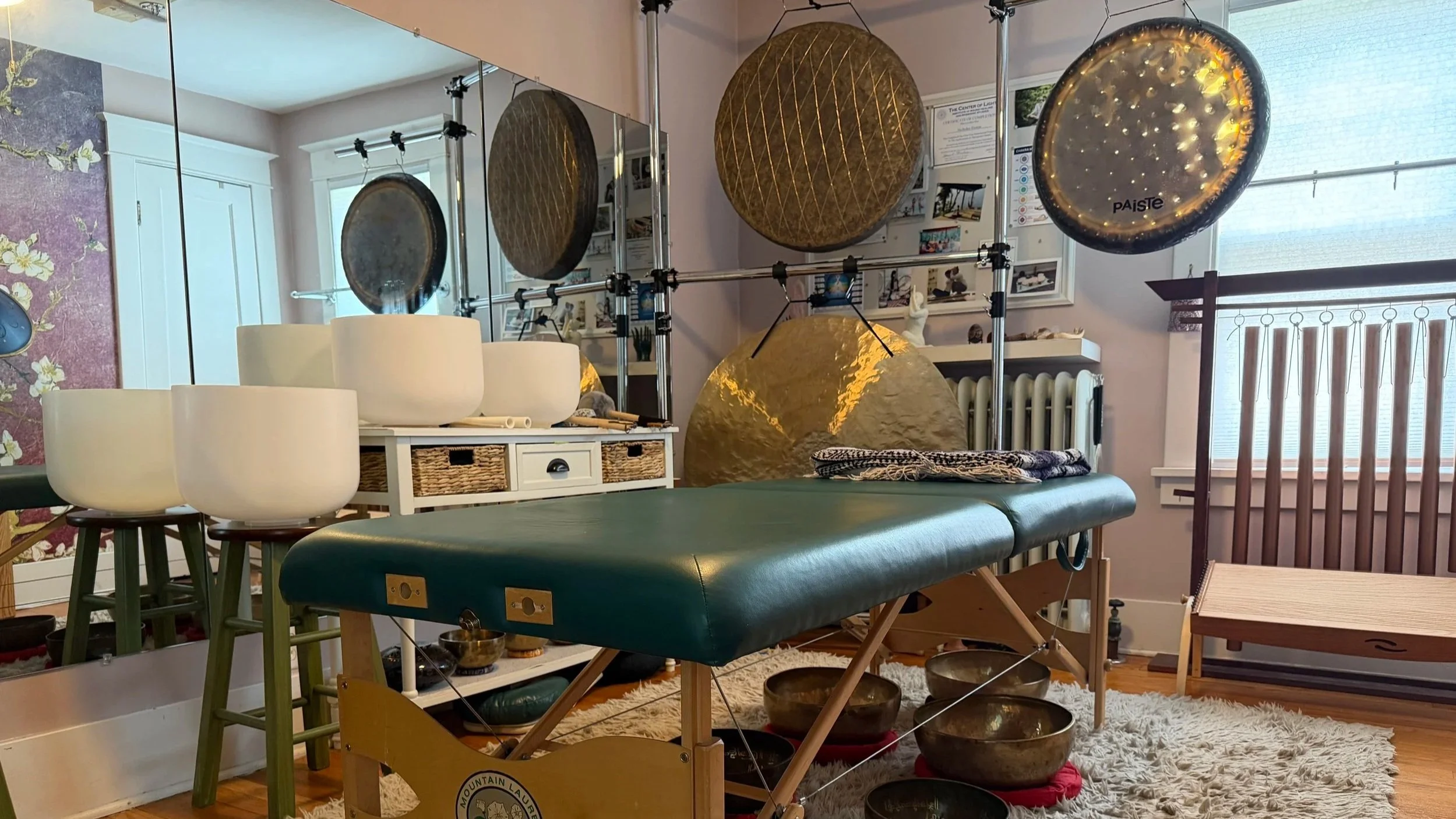
Once we begin, you'll get comfortable — usually lying down on a massage table or reclining in a zero-gravity chair. From there, it's all about your comfort: blankets if you're cold, a ceiling fan if you're hot, bolsters for support, and an eye pillow if you'd like it fully dark.
You can also choose to incorporate aromatherapy — I create custom blends based on what you're looking for from the session.
I'll then use a combination of instruments — gongs, drums, rain sticks, metal and crystal singing bowls, voice, harps, flutes, and chimes — moving around and above you to create layered tones and vibrations. Some of what you experience is sound you hear; some of it is vibration you feel, especially if I place instruments near or on the body.
A few things that are completely normal during a session, especially for first-timers:
Your mind will wander. You are not failing at this. Thoughts, mental to-do lists, random memories — all normal. You don't need to fight them, just let them pass.
You might feel emotional. Sound can loosen things that words don't always reach. Some people cry, laugh, or feel a wave of emotion they weren't expecting. Others feel nothing but deep calm. Both are fine.
Time may feel strange. Many people lose track of how long they've been lying there — sessions can feel like they lasted five minutes or five hours.
You might twitch, feel tingly, or get sleepy. These are all signs your nervous system is shifting out of "alert" mode.
You might fall asleep, and that's okay — even if you snore. In a private, one-on-one session, there's no one else to disturb. The vibrations continue to have their effect even while you're deeply asleep, so there's nothing to be self-conscious about.
The session itself typically runs 60 minutes, with the sound portion lasting the bulk of that time. Toward the end, I let the sounds resolve to silence and hold that space briefly before gently bringing you back.
After the Session
I'll bring you back gently, speaking softly once that stillness has settled. Take your time sitting up — some people feel light and floaty for a few minutes, so there's no rush.
We'll have a short check-in afterward if you'd like one — not required, but many people find it helpful to name what came up, whether that's a physical sensation, an emotion, or just general grogginess.
A few things you might notice in the hours or day after:
Deep relaxation or unusual tiredness. Your body may want extra rest — that's a good sign, not a bad one.
Vivid dreams or better sleep that night.
A subtle mood shift — lighter, calmer, occasionally a bit tender or reflective.
Mild disorientation for a few minutes, similar to waking up from a nap.
Drinking water afterward and giving yourself a little unstructured time before jumping back into a busy schedule can help you integrate the experience rather than snapping straight back into "go mode."
Common First-Timer Questions
Do I need to know how to meditate? No. Sound healing doesn't require any meditation background. The sound itself does most of the work of quieting the mind — you don't need a prior practice.
What if I fall asleep? Totally fine, and very common. Your body often knows exactly what it needs.
What if I don't feel anything? Also fine. Effects aren't always dramatic in the moment — some people notice the shift more in how they sleep or feel over the next day or two.
Is this a substitute for therapy or medical care? No — sound healing is a complementary practice for relaxation and stress relief, not a replacement for medical or mental health treatment.
Ready to Try It?
If you've been curious about sound healing but weren't sure what to expect, hopefully this takes some of the mystery out of it. There's no "right" way to experience a session — just an open invitation to lie down, let go, and see what the sound brings up for you.
Book your session here.
