
Five Minutes, One Sound
This time of year, the light fades earlier and the calendar fills faster. Many of us feel it in the body before we name it: a shallow breath, tight shoulders, a mind that keeps running long after the day ends.
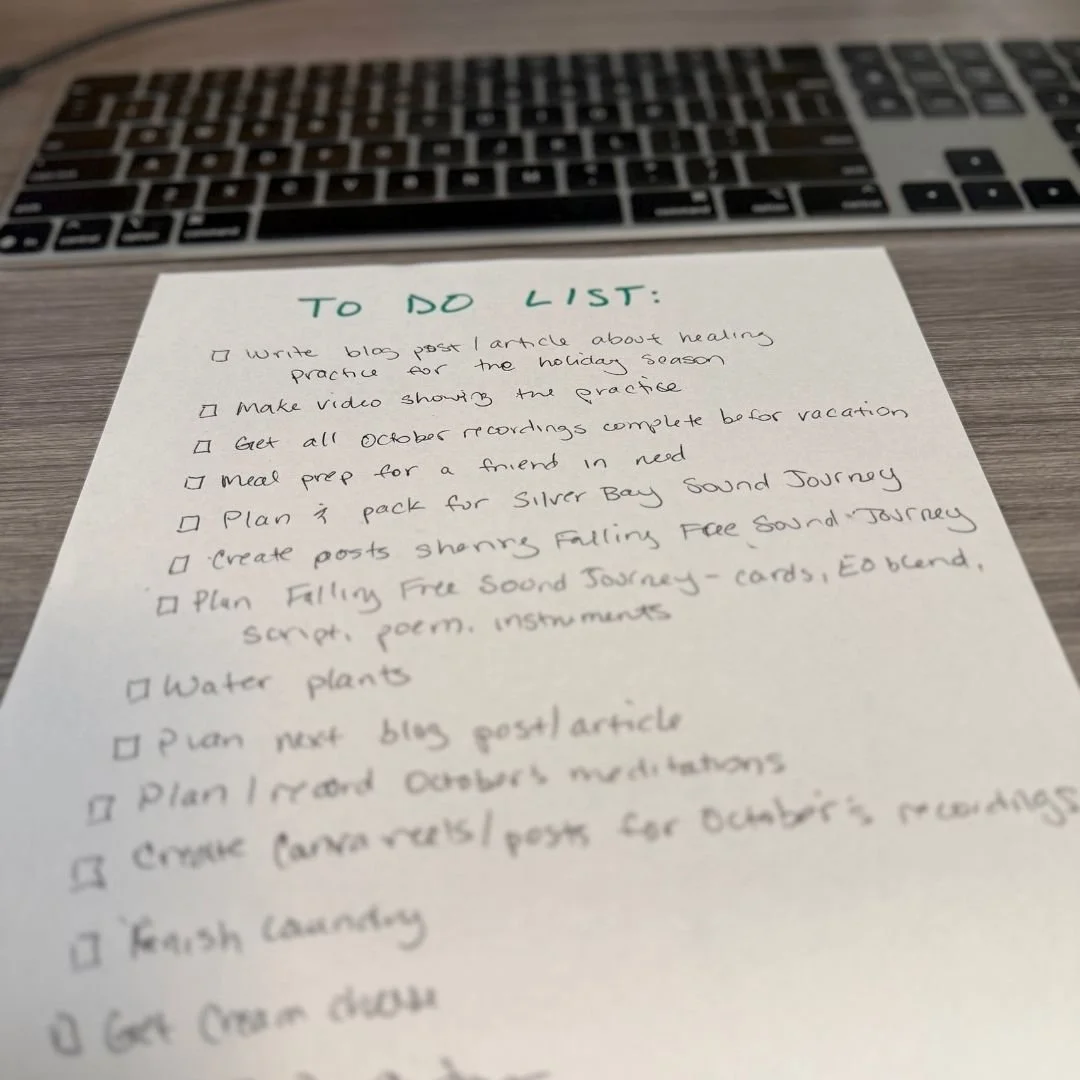
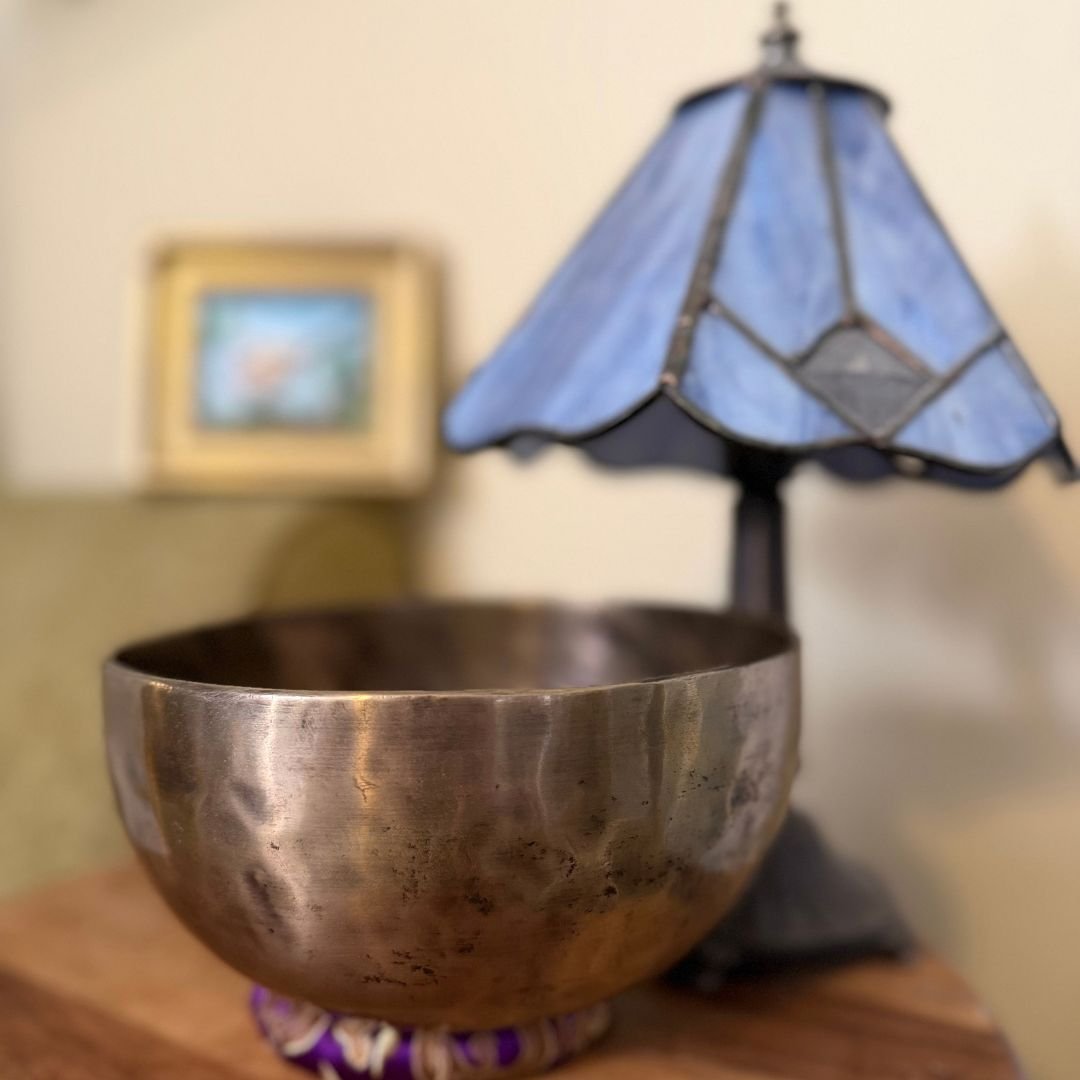
I need this reminder too. As I write this post, I'm racing to check things off my to-do list before I leave for vacation later this month, and this article is on that list. A few minutes ago, I noticed a tightness in my chest. I couldn't seem to get a full breath. So I reached for my Himalayan bowl and invited it three times. The grip has loosened, and I'm breathing more easily.
Because it is so helpful, I want to teach you the practice, too, so you can make it your own. It only takes about five minutes. You need one instrument and a place to sit. Once you know it well, you can use it before a family gathering, at your desk between meetings, or at the end of a long day.
Why a single sound helps
This practice rests on two simple ideas.
A fading sound gives the attention somewhere to go. When you follow a tone from the moment you invite it until it disappears, the attention has a clear, gentle task. Racing thoughts have less room to take over, and you don't have to force them out.
A long exhale tells the body it's safe. Slow breathing, with an exhale longer than the inhale, engages the branch of the nervous system that helps the body rest and recover. Research on slow, paced breathing links it with a lower heart rate and a calmer stress response.
Humming adds one more layer. The vibration of your own voice gives the body something to feel as well as hear, and it naturally lengthens the exhale.
For a fuller look at how sound supports the nervous system, see What Is Sound Healing: A Grounded Guide to Calm and Nervous System Support.
The practice, step by step
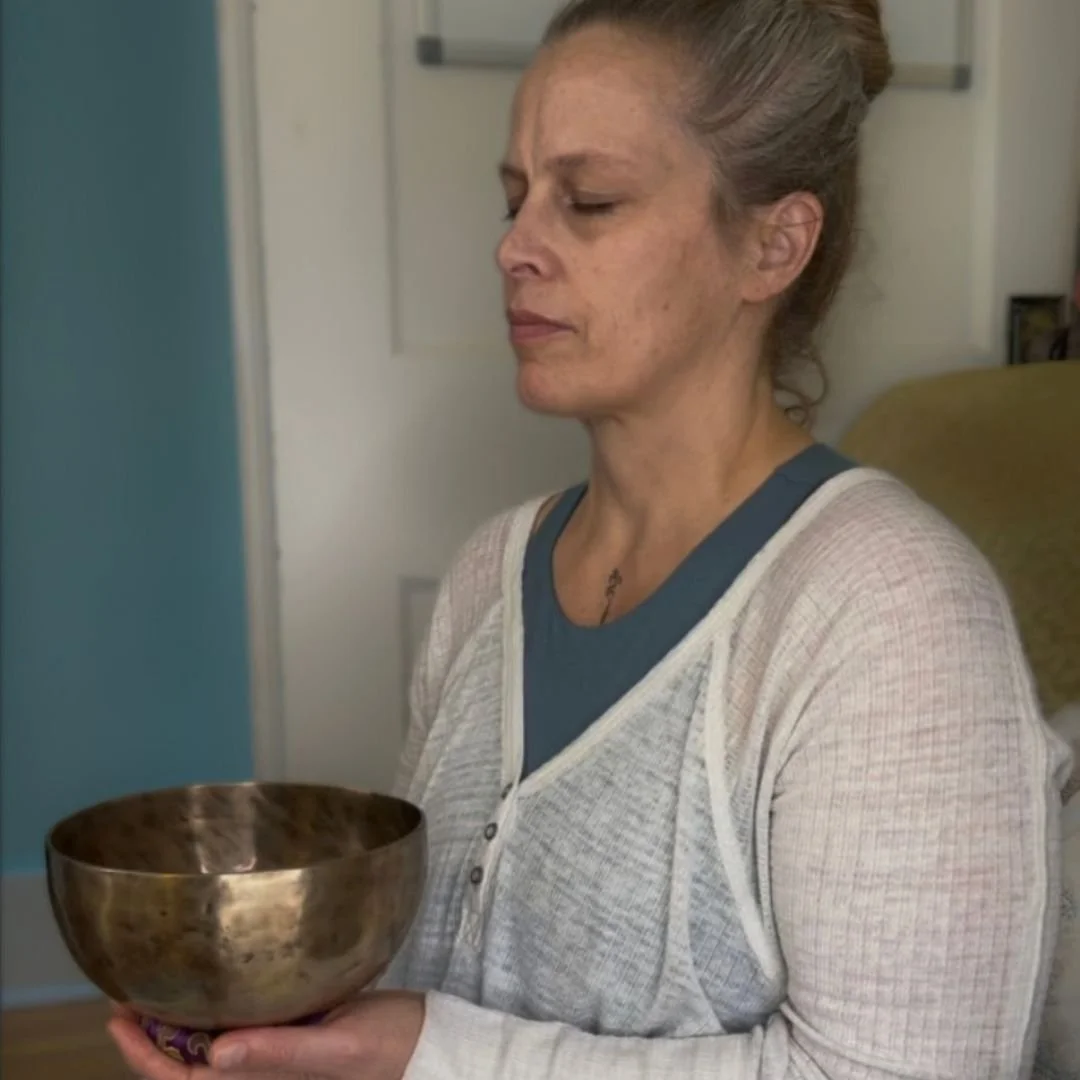
What you need: one instrument that rings and then fades. A singing bowl, a chime, or a small bell works well. If you don't have an instrument, a recording of a single sustained tone works too. My Top Picks for a Home Sound Meditation Practice guide includes budget-friendly options.
Settle in (about 30 seconds). Sit with both feet on the floor. Let the hands rest. Close the eyes, or let the gaze drop to the floor. Notice where the body meets the chair.
Check in. Before you make any sound, notice how you feel right now. Is the breath quick or slow? Where does the body hold tension? You don't need to change anything. Just take note, so you can compare at the end.
Invite and listen (three rounds, about 2 minutes). Gently invite a single sound from the bowl or chime. Listen as it rings, softens, and fades. Keep listening until you can no longer hear it, then listen a moment longer. When the attention wanders, bring it back to the sound. Repeat for three rounds.
Let the breath follow the sound (about 1 minute). The next time you invite a sound, breathe in through the nose, then let a slow exhale through the mouth last as long as the sound. Don't strain. If the sound outlasts the breath, simply breathe in again and keep listening.
Add your own sound (about 1 minute). Now set the instrument down. Place your hand on your chest. Breathe in, then hum or sigh on the exhale at any pitch that feels comfortable. Feel the vibration in the chest, throat, and face. Do this for three to five breaths.
Rest in the quiet (about 30 seconds). Let all sound stop. Sit in the silence that follows. Then check in again: the breath, the shoulders, the jaw. Notice what shifted, even if the change feels small.
Making it work in a busy season
Keep the sound within reach. A small chime on a desk or nightstand works as a visual reminder as well as a sound source.
Pair it with a moment that already happens. Try it when you first wake up, before you open the laptop, or after the dishes are done. Tying the practice to a daily moment helps it stick when routines get disrupted.
Shorten it when you need to. On the fullest days, one round of invite and listen plus three hummed breaths still counts.
Use it as a buffer. Before a gathering, a hard conversation, or a busy shopping trip, a few minutes of this practice helps you arrive steadier. Afterward, it gives the nervous system time to catch up.
If it doesn't feel calming
If the mind races more: that's common at first. Shorten each round, and keep the eyes open with a soft gaze on the instrument.
If humming or sighing feels awkward: hum quietly, or skip that step and simply lengthen the exhale.
If a sound feels too sharp: invite the sound more softly, try a different spot on the bowl or chime, or move farther away from it.
If emotions come up: that can happen when the body slows down. Let them be there, and stop whenever you want to.
A steadier season, five minutes at a time
The season will likely stay full. This practice won't empty the calendar, but it can give the nervous system a few minutes of rest on even the busiest day. Return to it often, and let it become familiar.
If you'd like to spend more time in sound, I offer private sessions, small group sound baths in my home studio, and recorded sound meditations through my InSound membership. You can explore them on my website.
